I’m in the middle of reading The Moral Economy by Samuel Bowles. It’s about how explicit financial rewards and punishments can lead to bad consequences through their “crowding-out” of a person’s pro-social motivations. I’m learning a lot from the book and I would recommend it.
Uncategorized
Econ 101 semester in review: most effective chart of the year
After my first semester teaching Econ 101, I have lots to digest. I’ll post thoughts here over the next few weeks as I go through the process of revising for the second go-around.
PSA
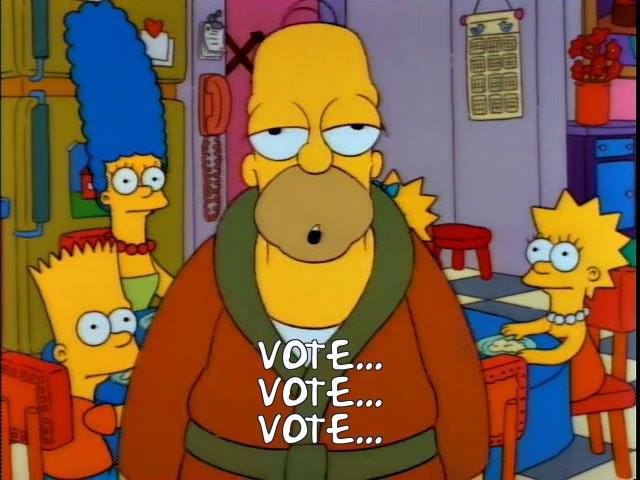
The secret ingredient is cough syrup.
OER event at PC, Nov. 1st
Next Tuesday Nov. 1st I’m helping to facilitate a session on open educational resources for the Center for Teaching Excellence here at Providence College. I’ll be talking about my experience adopting an open textbook this semester and some of the evidence from the economics literature on open ed and open access infrastructure. Here’s a teaser: across my sections of Principles of Microeconomics this semester I have 81 students. Assigning an open textbook instead of the industry standard will save my students a total of almost $30,000! That seems like a good deal to me!
My colleagues Andria Tieman and Hailie Posey will be talking about what OER means and how to find and adopt resources. They are the ones who actually know a lot about this stuff! The CTE announcement is below. If you’re around, consider joining us!
History repeating, volume ∞
Right now I’m reading Imbeciles: The Supreme Court, American Eugenics, and the Sterilization of Carrie Buck by Adam Cohen. It’s about Buck v. Bell, the 1927 Supreme Court decision on forced sterilization, and the shocking breadth of the surrounding eugenics movement. It’s leaving me frequently speechless and the writing is great. I recommend it.
A short story about how to spend $300m
This is the first paragraph from a really neat economics paper by Budish, Cramton, and Shim (QJE 2015):
Platform exclusives suck
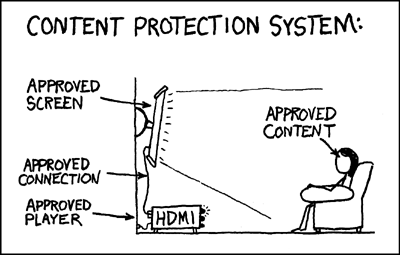
My excitement for the new Frank Ocean album was high, and it lasted until I read those three filthy little words: “Apple Music exclusive”.
Trump does not understand trade (duh)
I can’t believe I’m doing this, and yeah stop the presses, Trump is ignorant about something. But something stood out to me from today’s NYT transcript of David E. Sanger and Maggie Haberman’s… conversation with the Republican presidential nominee.
The headlines were rightly grabbed by Trump’s apparent willingness to violate the U.S.A.’s treaty obligations to the Baltic states. But what stood out to me were his silly statements on trade deficits. What bothered me is less that he characterizes a “trade deficit” as a self-evidently Bad Thing, which he does and I wish he wouldn’t, but that the NYT’s correspondents went along with the characterization.
They challenged him, yes, but kept the implication that trade deficits are indeed bad. Their pushback was that trade deficits are somehow the price the U.S.A. pays for keeping peace around the world? I don’t quite get that. So while I appreciate that we are probably not going to change the general public perception that trade deficits are a Bad Thing any time soon, I think it’s important that we at least try to expose Trump’s policy charlatanism as clearly as we can.
Anyway, here’s what that person who will contest the U.S. presidential election(!) said.
We have massive trade deficits. I could see that, if instead of having a trade deficit worldwide of $800 billion, we had a trade positive of $100 billion, $200 billion, $800 billion.
OK, so first of all, the opposite of a trade deficit is a trade surplus, not a trade positive. That is some high grade Orwellian doubleplusungood nonsense. So bravo I guess for some rhetorical sleight of hand to quickly imply that deficits are simply the opposite of something that is defined as good.
We’re spending money, and if you’re talking about trade, we’re losing a tremendous amount of money, according to many stats, $800 billion a year on trade. So we are spending a fortune on military in order to lose $800 billion.
This is hot garbage. “Lose”? These are the words of a person who has no idea how any of this works. A trade deficits means more imports than exports. Imports are stuff. I love stuff! A country does not “win” if it exports more than it imports. The use of the words “lose” and “win” don’t even make any sense here.
Milton Friedman said this in 1978:
The gain from foreign trade is what we import. What we export is the cost of getting those imports. And the proper objective for a nation, as Adam Smith put it, is to arrange things so we get as large a volume of imports as possible for as small a volume of exports as possible.
We need foreign currency to buy foreign stuff. Foreigners need dollars to buy U.S. exports. So all else being equal one may expect a trade deficit to mean a weaker U.S. dollar. But the U.S. is in a nice, privileged position, in that the U.S. is considered a stable and attractive destination for foreign investment, for example in U.S. Treasury Bills, and investment in U.S. firms. So there is a big demand for dollars in that way, and so the dollar doesn’t get weakened that much. The U.S. gets to have its cake and eat it too. Cool!
This, incidentally, is a factor that also works to keep borrowing costs low for the U.S. government. It is worth noting that earlier in this chaotic Trump campaign, the candidate implied that he would be quite willing to default on U.S. debt. That is one way in which this nice story I’ve just told about the U.S. getting a bunch of cool imports and being attractive to foreign investors could be undermined by ignorant policy. The attractiveness of the U.S. to foreign investors is a crucial part of the story.
For some further reading, here is another simplified explanation of why trade deficits are more Just A Thing than an Inherently Bad Thing.
My reading of this issue with this candidate, and maybe I’m wrong but this is my best guess, is that at least in this case he’s not engaging in the typical misleading or oversimplifying, but genuinely does not have the first idea how macroeconomic policy works. I think he genuinely believes that the trade balance of a country is equivalent to the balance sheet of a firm. That exports are equivalent to expenses and imports are equivalent to receipts.
Not only is Trump, as Ken Burns argues, perhaps the least qualified person ever to be a major party nominee for U.S. President, even those ways in which he is purported to be qualified—his alleged business acumen—are somewhere between nonexistent and actively harmful.
Cold Little Heart / Black Man in a White World – Michael Kiwanuka
These are the first two tracks from his new album, Love & Hate. Check it out!
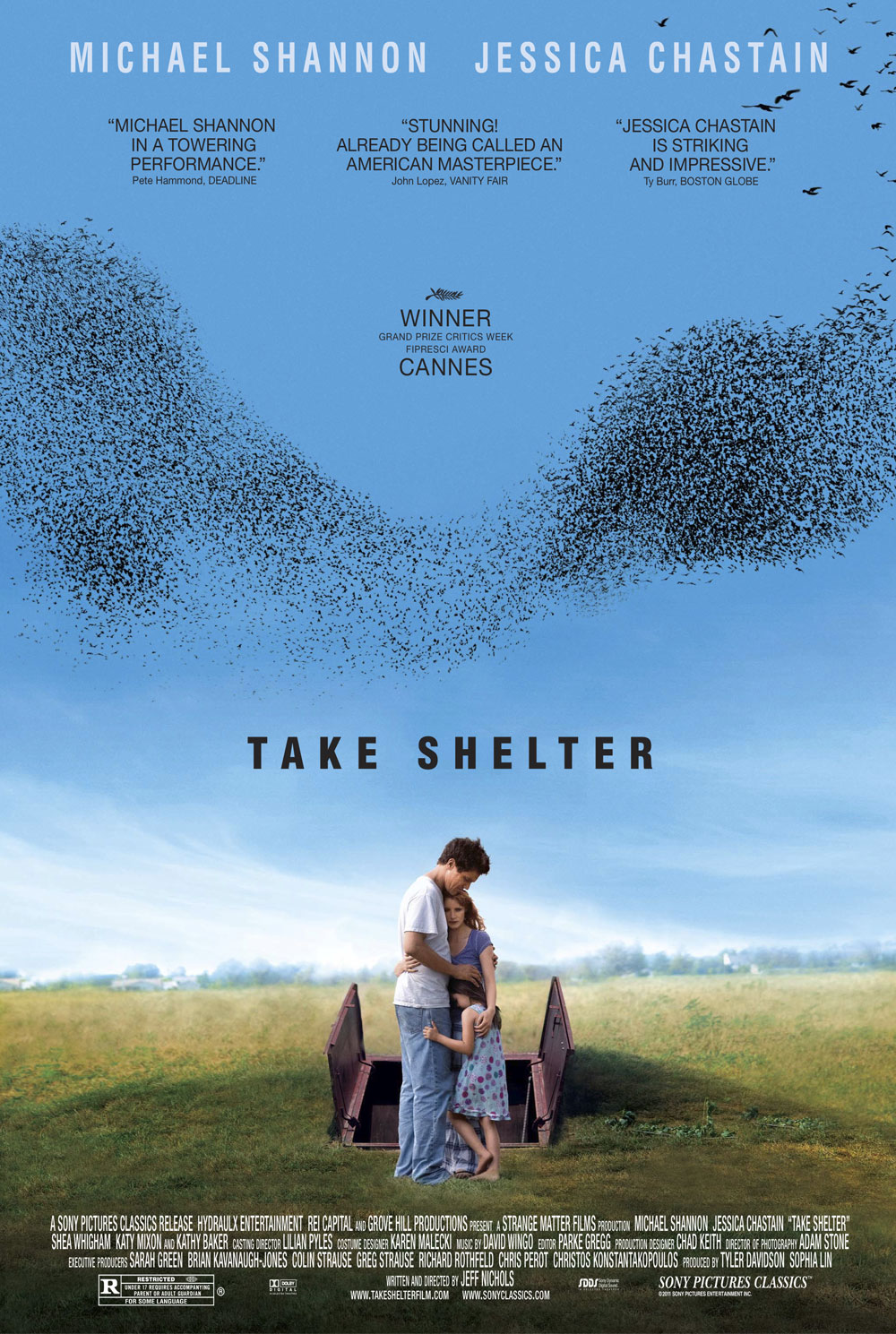
Take Shelter (2011)
(A warning: this review is more spoiler-heavy than usual.)
A bit of mystery about a character’s mental health can stretch a long way. I found “Donnie Darko” compelling because of the fragility of Donnie’s connection to reality – the movie was strictly his, but his what? Visions, wishes, delusions, dreams? It was like watching oil on water. I was therefore disappointed when I learned that the whole thing was intended as straight science fiction. Figuring out sci-fi mechanics can be fun, but not when the whole fabric of the movie had seemed to be up for grabs. All of poor Donnie’s relationships become uninteresting at a stroke.
I had something like the opposite problem with “Take Shelter”. It tells the story of Curtis (Michael Shannon), a construction worker who has what his colleague calls “a good life” with his wife Samantha (Jessica Chastain) and their young daughter Hannah (Tova Stewart). Hannah has (presumably quite recently) lost her hearing, and Curtis and Samantha’s strength and tenderness against this challenge shows them to be a sturdy pair who we can trust.
Curtis begins to experience vivid, violent dreams and hallucinations of catastrophic storms or violence toward himself or Hannah. We see some of them first hand, stitched into the film as they are stitched into Curtis’s life. They are jarring, and so we can share Curtis’s twin reactions to them. On the one hand he knows that he is ill and seeks treatment, but on the other he cannot shake the terror and pursues real-world solutions to his dark visions, fixating on disassociating from those who hurt him in his visions and on building out the storm shelter on his property in anticipation of the apocalyptic storm.
We learn that his mother is a paranoid schizophrenic, in assisted living since her illness manifested when Curtis was around the age that Hannah is now. This experience makes Curtis admirably pragmatic, immediately researching mental illness as the library and making an appointment with his doctor. Small but critical barriers begin to appear: he is referred to a distant psychiatrist but cannot make the long trip. He self-diagnoses as potentially schizophrenic to the local counselor he visits instead, but she is not licensed to medicate him. He talks about his mother’s history and his fears to the counselor, but she is transferred.
While the path to a solution based in reality is blocked, the path to “solving” the problems of his delusions is entirely clear. When he asks his work partner for help in breaking company rules to borrow equipment for the folly of the storm shelter expansion, he is indulged. His distancing himself from those who hurt him in his dreams is allowed by his wife and boss, who of course at first have little notion of his mental deterioration. Critically, he easily obtains an ill-advised home improvement loan for the expansion of the storm shelter. It would have been easy to overplay a subtext that here is a hard-working man who is crushed between a healthcare industry that cannot help with his real problems, and a financial industry that enables his folly.
Luckily the film’s balancing act between lucidity and delusion is too subtle for that, and Shannon makes Curtis too compelling for triteness. I found it easy to share both Curtis’s creeping dread and his self-aware despair. Because of this, as his tether back to the right path frays, his deluded decisions that would seem so incredible in a vacuum become almost unwatchably brutal. The trick of making the outlandish empathetic is pulled off here as well as I can ever remember. When Curtis finally explodes in paranoid rage, it is not a stereotypical crazed rant but a tragic culmination. When Samantha pleads with him and tries to force him to address his delusions directly, she seems naive rather than strong.
But there is a problem. This painstaking, wonderful portrayal of a man grappling against himself and his own demise is inexplicably undermined by a parlor trick of an ending that dishonors everything that has gone before. There is emphatically no question of when and whether Curtis is suffering from visions or delusions at any given moment, until the very last moments of the whole film. Then, suddenly, we seem to be invited at least to entertain the notion that Curtis’s delusions are somehow real. Suddenly nothing is ruled out, and the whole film is up for grabs.
I’m sure it is possible to construct as many plausible, coherent explanations for what is going on at the end as we could care to, but why allow this? The solid whole that was so affecting seems to dissolve into an oil slick of interpretation. Perhaps for some this will give the whole more resonance, but I would have been happier if the portrait that had seemed so convincing and powerful had been allowed to stand on its own.
Links: IMDb, Metacritic
 Jim Campbell